When Compute Becomes Self-Aware…
Software no longer blindly executes instructions. It observes the pathways it actually runs, understands how input data changes execution, and adapts in real time to achieve the best possible outcome.
Observe
Sees the execution pathways your software actually takes.
Understand
Learns how data shape, hardware, and runtime conditions affect behavior.
Adapt
Adjusts execution dynamically to pursue the best outcome in real time.
SelfAware Compute improves compute throughput and predictability — slashing power consumption while accelerating the speed of execution.
In lab tests, SelfAware reduces energy consumption by as much as 91%.
Matrix Multiply
SelfAware Compute Optimizes Software for the Environment the Software Runs In
Software doesn't run in a vacuum - it runs on real hardware with real-world constraints. SelfAware Compute dynamically optimizes execution for the specific environment in which software operates, improving performance, reducing energy consumption, or achieving the optimal balance between the two.
Everyone's Focused on
Making Hardware Faster.
Few Have Focused on
Optimizing How Software
Actually Runs.
For decades, the industry has focused on: Smaller transistors, Higher clock speeds, More cores, Faster interconnects
But software execution itself — the way processors step through machine code — has remained fundamentally unmanaged.
Processors execute instructions.
They do not understand execution pathways.
SelfAware Compute does.
Compute has expanded. Optimization has not.
Five fundamental principals that make SelfAware Compute a foundation for modern compute.
Ubiquitous by Design
SelfAware Compute applies everywhere compute runs.
From Cloud to Edge. From Watts to Megawatts.
Compute is expanding across every layer of modern systems. Cloud infrastructure, industrial equipment, field systems, and personal devices all rely on software execution.
- Hyperscale + enterprise workloads
- Industrial plants + real-time systems
- Field equipment + rugged edge compute
- Personal devices + local execution



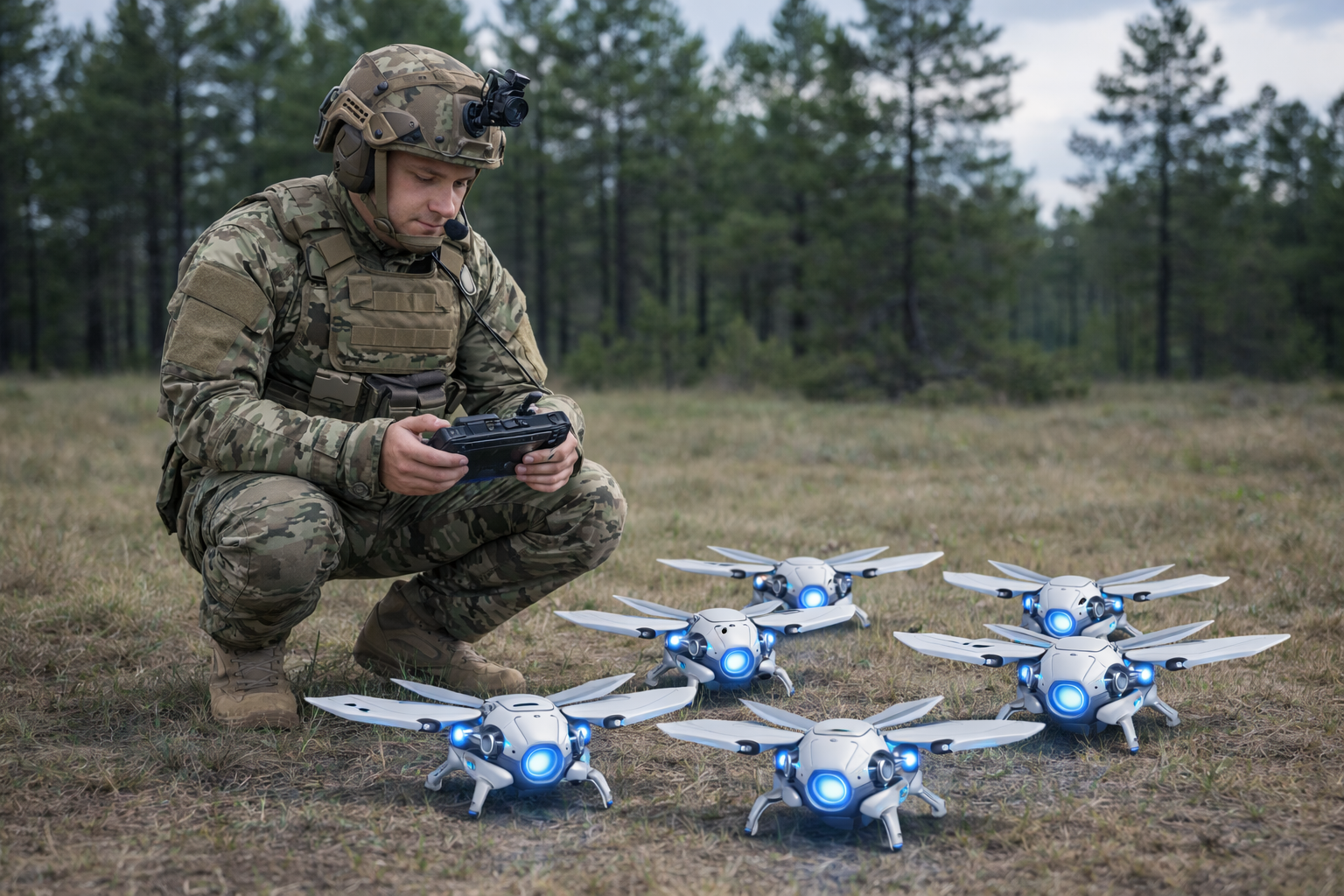
Cross-Industry Impact
Any domain. Same advantage.
Every vertical is becoming computational.
As software becomes the control plane for the physical world, performance and efficiency become strategic—across mission-critical and specialized systems.
- Defense + national security systems
- Enterprise + infrastructure software
- Biotech + genomics + scientific computing
- AI + IoT + robotics + edge networks
No New Hardware
No silicon redesign required.
Optimize software. Not silicon.
SelfAware Compute improves execution on your target architecture—without a chip redesign, fabrication cycle, manufacturing ramp, or ecosystem migration.
- No new hardware development cycle
- No new manufacturing or supply chain risk
- No platform fragmentation for users
- Ship improvements as software updates


Beyond Parallelization
More than parallelism.
Whole-program optimization: serial + parallel.
SelfAware Compute doesn’t just ‘add threads.’ It optimizes the serial path and extracts safe parallel execution where it exists—improving throughput and predictability.
- Optimize serial bottlenecks
- Extract safe parallel execution pathways
- Control synchronization only where necessary
- Improve predictability and utilization
Automatic Optimization
Adoption without retraining.
No parallel programming required.
Teams shouldn’t have to rewrite systems around new models or train on niche frameworks. SelfAware Compute optimization is automatic—software stays software.
- No kernel rewrites or framework lock-in
- No training teams on new parallel models
- Works with existing code structure
- Clear, auditable transformations

Software has never decided how it should run.
SelfAware Compute adds an execution intelligence layer above the compiler.
It understands the workload, models the execution pathways,
and chooses how software should behave before the compiler turns that decision
into machine-level execution.
Decision layer
Understands inputs, software structure, hardware limits, and goals like time, energy, and memory. Then selects the execution strategy that best fits this run.
Translation layer
Takes the chosen execution plan and emits efficient instructions for the target machine. The compiler makes the decision executable.
SelfAware Compute decides how your program should run. The compiler makes that decision real.
One execution intelligence layer
across the lifecycle.
SelfAware Compute is not a replacement for compilers, profilers, analytics, or deployment tooling. It works across the lifecycle and makes the existing stack smarter.
Set the goal. The system figures out the rest.
Move the constraints and watch the execution plan adapt. Instead of hardcoding one behavior, SelfAware Compute models the workload, evaluates the pathway, and selects how the software should run for this specific situation.
88.1% effective parallel efficiency for the selected pathway.
Pathway score 98 / 100 based on current workload and constraints.
86.3% faster than the serial baseline.
76.9% lower energy use.